Gary Tanchak, DC, is a Chiropractor who takes a comprehensive approach to spinal and extremity injuries. He takes the entire body’s biomechanics and lifestyle into account when addressing injury to help rid the patient of their pain and keep it from returning in the future. Dr. Tanchak addresses the patient’s injuries through a combination of passive modalities, such as spinal and extremity manipulations, Active Release Technique, and non-surgical spinal decompression.
Massage Gun Advice team is committed to provide the highest quality articles and information which follows the highest editorial standards.
Each article and content is reviewed for medical accuracy and validated by members of our Expert Board. Their knowledge and experience guarantee quality and provide confidence in published data.
We support a zero tolerance policy with regard to any attempt of plagiarism or bad intentions of our authors or any associates.
Cellulite is extremely common, especially on the thighs and glutes, affecting most women at some point. Many people wonder whether massage guns, a popular recovery tool, can help. The short answer: they cannot remove cellulite. However, massage guns may help improve circulation, support lymphatic movement, and temporarily smooth the skin’s appearance.
In this article, we explain what cellulite is, what causes it, how massage guns fit in, and provide practical guidance for using one. We also outline the best attachments, usage frequency, and key factors to consider when buying a device.
Our team has hands-on tested a wide range of massage guns across different price points, assessing amplitude, stall force, ergonomics, and usability. We also consulted a physiotherapy expert to ensure our insights align with clinical understanding.
This article is for informational purposes and should not replace advice from a doctor or licensed healthcare provider.
However, rest assured that the information provided here is accurate because this post has been written by a licensed physiotherapist, Dr. Alex Stone, DPT.
Massage guns can stimulate circulation, support lymphatic movement, and temporarily improve how the skin looks. They do not remove cellulite, break down fat cells, or produce permanent structural changes. The evidence base for percussive devices specifically is still limited — most insights are drawn from manual massage research.
What is Cellulite?
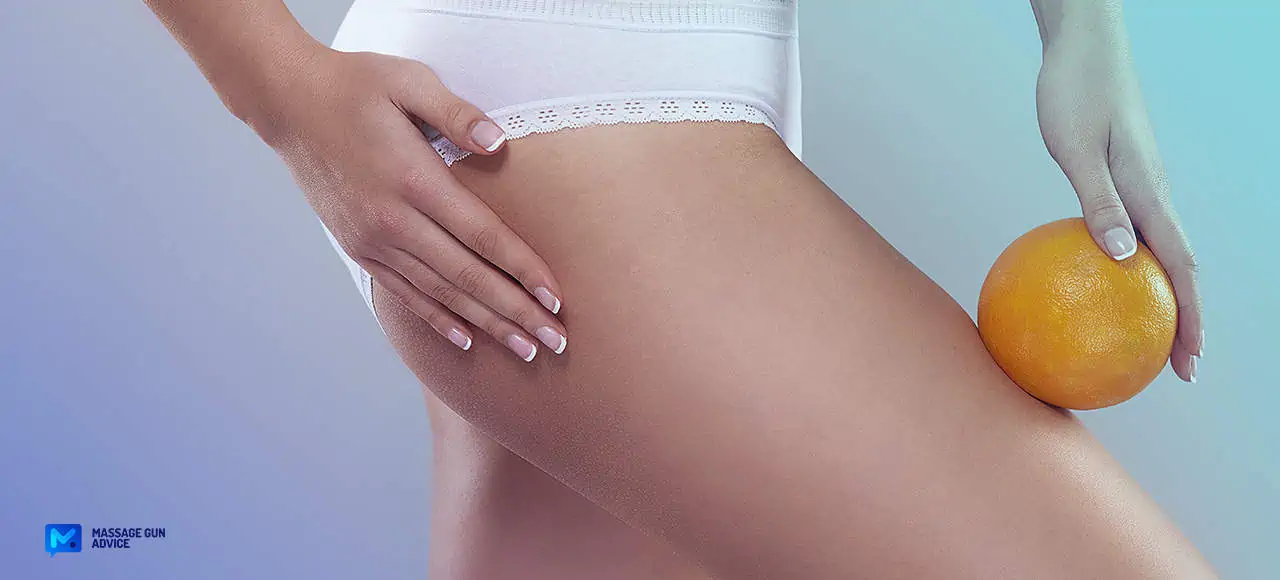
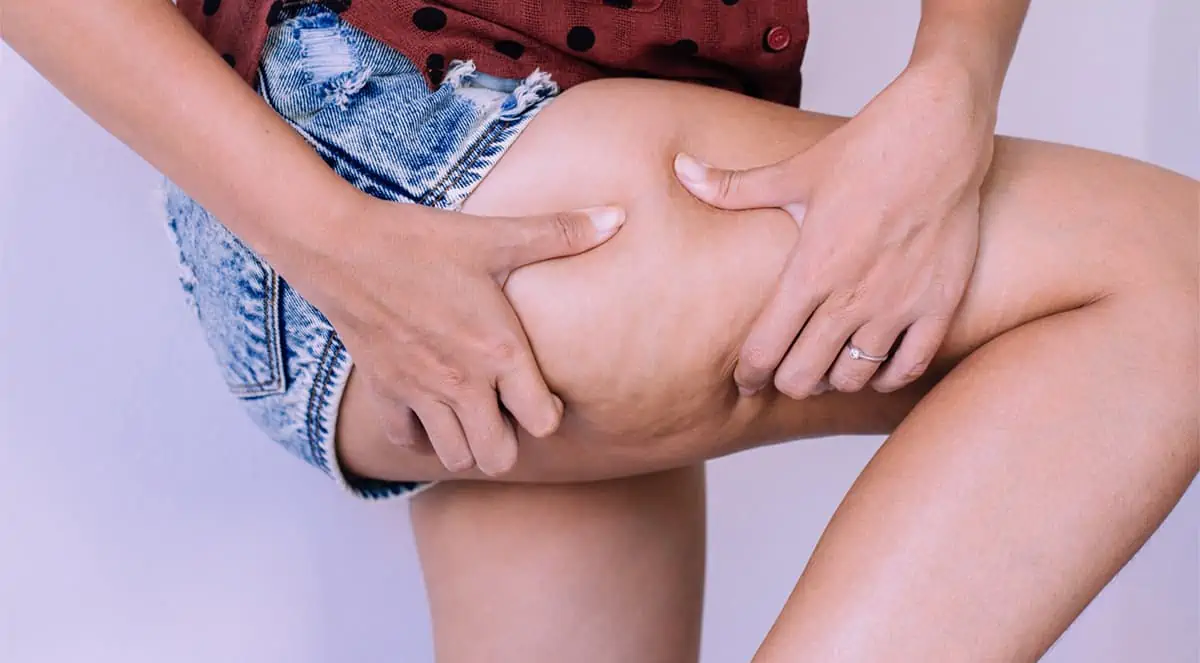
Cellulite refers to the dimpled or lumpy texture that appears on the skin, most often on the thighs, hips, buttocks, and abdomen. It happens when pockets of fat beneath the skin push upward against the connective tissue, creating an uneven surface.
The dimpled appearance varies considerably. Some people have very mild textural changes that are only visible under pressure. Others have more pronounced dimpling that is visible at rest. Severity tends to increase with age as the skin loses elasticity, though it can also appear in younger people.
Cellulite is not the same as excess body fat. Many lean, active people have it. The way fat is distributed beneath the skin and the arrangement of connective tissue matter more than overall body composition.
What Causes Cellulite?
Several factors contribute to cellulite, and most of them are structural rather than behavioral.
Connective tissue structure
Women typically have vertical bands of connective tissue (called fibrous septae) that run perpendicular to the skin surface. This allows fat to protrude upward more easily, creating the characteristic dimpling. Men tend to have a cross-hatched pattern that provides more resistance.
Fat distribution
The location and volume of subcutaneous fat influence how pronounced cellulite appears. Areas like the thighs and glutes are common sites because fat tends to accumulate there.
Hormones
Estrogen plays a role in fat storage patterns and skin structure, which partly explains why cellulite predominantly affects women. Hormonal changes during puberty, pregnancy, and menopause can all influence its development.
Genetics
There is a clear hereditary component. If close female relatives have significant cellulite, you are more likely to develop it as well.
Circulation and lifestyle
Poor circulation, a sedentary lifestyle, and smoking have all been associated with more pronounced cellulite. These factors affect skin quality and the health of the connective tissue beneath it.
It is worth restating: cellulite is not strictly a weight or fitness issue. Addressing lifestyle factors can help, but they do not guarantee elimination.
Is Cellulite Bad?
Cellulite is harmless. It does not indicate a health problem, and it does not require treatment from a medical standpoint. It is a cosmetic concern, not a clinical one.
That said, many people feel self-conscious about it, and there is nothing wrong with wanting to address the appearance. The wellness and beauty industries offer a wide range of products and treatments aimed at reducing it. Some have better evidence behind them than others, which we cover below.
What is worth keeping in mind is that even the most effective treatments tend to reduce the appearance of cellulite rather than eliminate it permanently.
Common Treatments for Cellulite
Exercise and strength training
Building muscle in the thighs and glutes can improve the underlying structure of the area and reduce the visibility of cellulite. Resistance training is one of the more consistently supported approaches in the literature.
Massage therapy
Manual massage has been used for decades as a way to stimulate circulation and temporarily smooth the skin’s surface. Results do not last indefinitely, but regular massage can contribute to improvements in appearance over time.
Topical creams
Many products contain caffeine, retinol, or other active ingredients that claim to tighten skin or reduce fat. Evidence for topical treatments is mixed. Some studies show modest short-term improvements, particularly from caffeine-based formulas, but results tend to be limited.
Medical treatments
Acoustic wave therapy, laser treatments, and subcision (a minimally invasive procedure to cut fibrous bands) have stronger evidence behind them. These are typically performed by dermatologists or aestheticians and vary in cost and downtime.
The pattern across most treatments is the same: they can improve appearance, but none eliminate cellulite permanently.
Are Massage Guns Good for Cellulite?
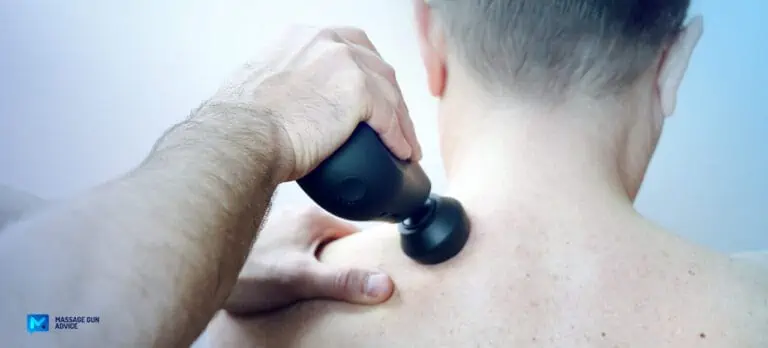
Massage guns deliver rapid, repetitive strokes (percussive therapy) to soft tissues, similar to manual deep tissue massage. When applied to cellulite-prone areas, they can stimulate blood flow, support lymphatic drainage, and temporarily smooth the skin.
The lymphatic system helps reduce fluid retention, so gentle stimulation may improve the appearance of dimpling. Evidence specifically linking massage guns to cellulite reduction is limited; most insights come from studies on manual massage.
Regular use of a massage gun is convenient and can provide consistent, repeatable stimulation compared with manual massage.
Can a Massage Gun Break Up Fat?
This is one of the most persistent misconceptions around massage guns and cellulite. Massage guns do not break down or destroy fat cells. Fat reduction occurs metabolically, through caloric deficit and exercise.
Using a massage gun may indirectly support cellulite management by aiding recovery from resistance training, allowing more consistent workouts, which can contribute to improved muscle tone and skin appearance over time.
Myth
Reality
Massage guns break up fat cells and reduce cellulite permanently.
Massage guns do not destroy fat cells. Fat reduction is metabolic — it requires caloric deficit and exercise. Percussive therapy can support recovery from training, but does not act on fat tissue directly.
What massage guns can and cannot do for cellulite
What the evidence supports:
Temporary improvement in skin appearance through increased local blood flow
Support for lymphatic movement with gentle, consistent stimulation
Recovery support from resistance training, which indirectly contributes to muscle tone
What the evidence does not support:
Permanent cellulite reduction
Fat cell breakdown or destruction
Replacement of exercise, medical treatment, or lifestyle changes
How to Use a Massage Gun for Cellulite
Technique matters more than intensity. During our tests, applying slow, deliberate strokes at moderate speed produced better skin response than using high speeds or pressing hard.
1. Best approach
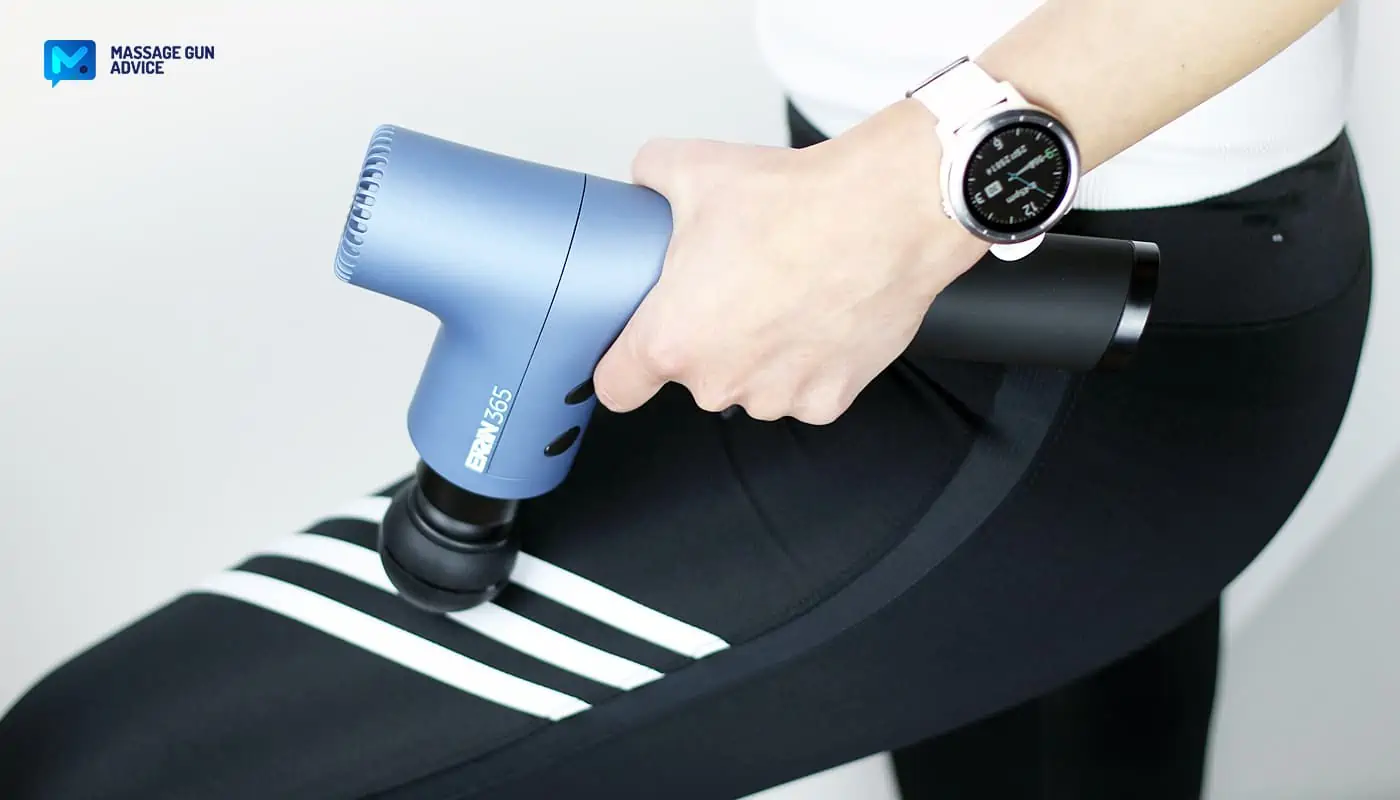
Hold the device perpendicular to the skin surface. Use a moderate speed setting rather than the highest. Move slowly across the area, keeping the device gliding rather than stationary. Work each section for one to two minutes before moving on. If you feel discomfort or a sharp sensation, reduce pressure immediately.
2. Target areas
The thighs, glutes, and hamstrings are the most common areas for cellulite and respond well to this approach. Avoid bony prominences and areas with broken or irritated skin.
3. Pressure
Let the device do the work. You do not need to press firmly to feel the effect. Excessive pressure can cause bruising, particularly on the thighs, where superficial blood vessels sit close to the surface.
Attachment choice affects how percussive energy is distributed in your tissues. Here are various attachments and how they help:
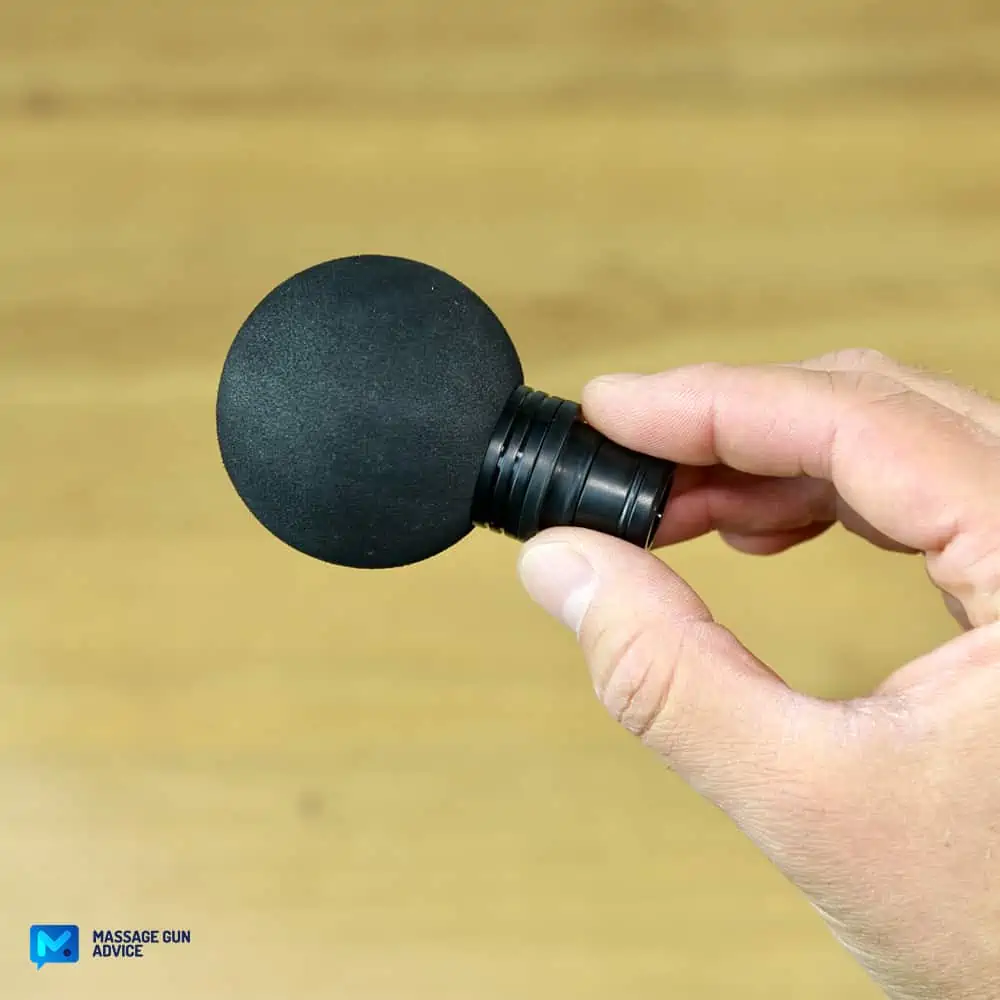
Ball attachment
This is our most-used attachment for soft tissue areas like the thighs and glutes. It distributes pressure evenly and is gentle enough for longer sessions.
Flat head
A good alternative to the ball for broader surface areas. Works well on the hamstrings and outer thigh.
Attachments to avoid
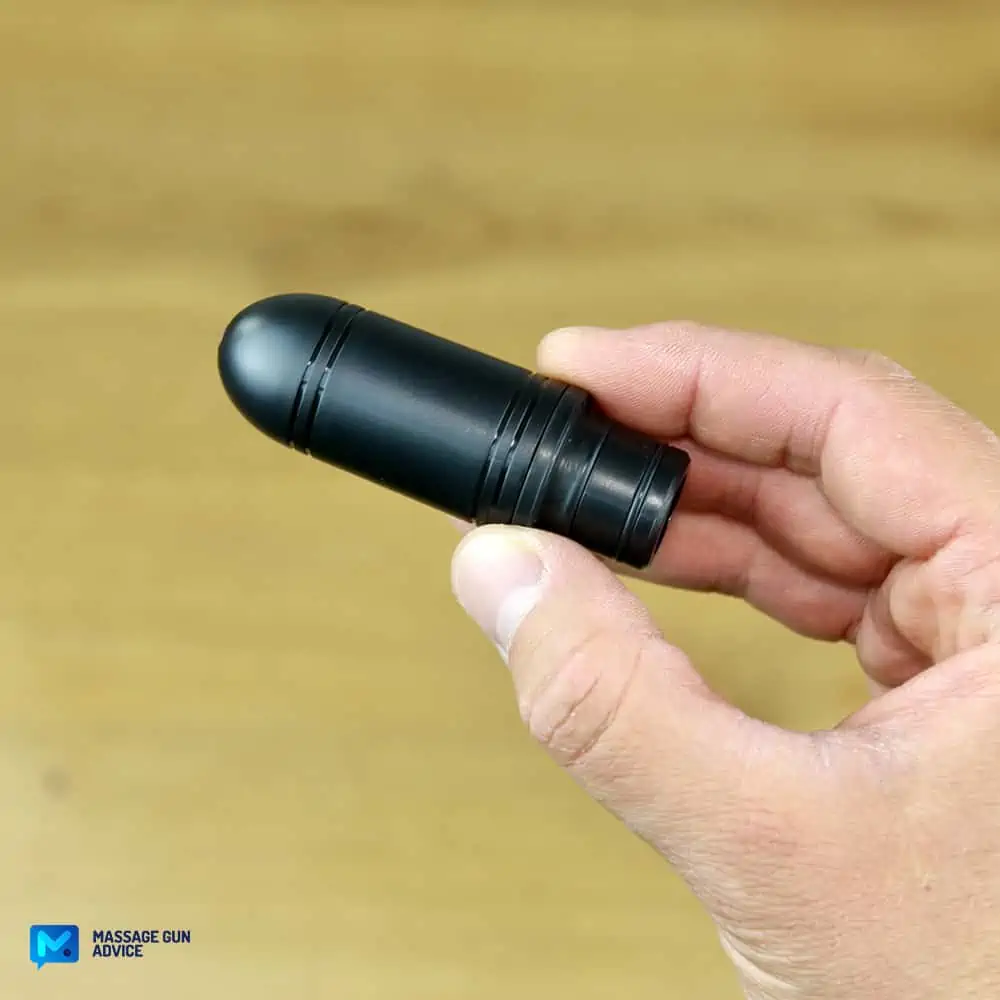
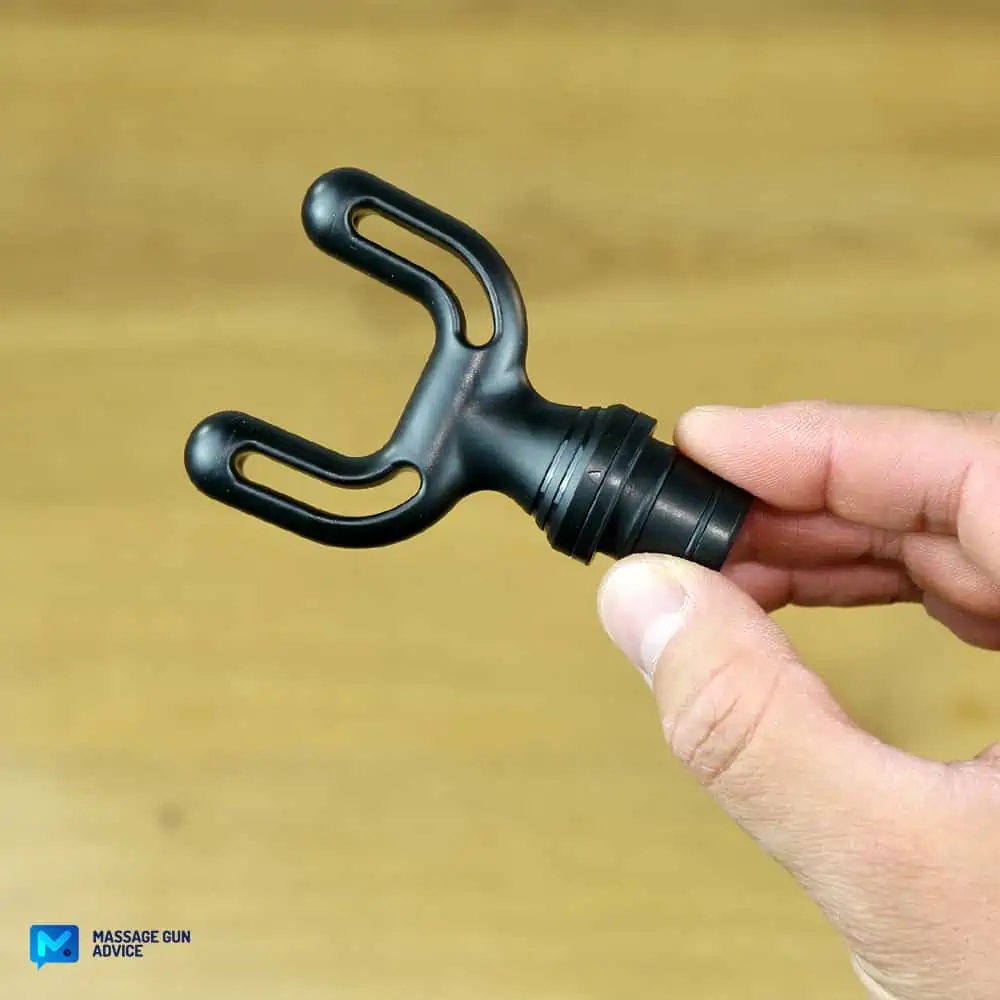
Bullet and fork attachments concentrate pressure into a very small area. This is useful for targeting specific trigger points in dense muscle, but too focused for general cellulite work. They can cause discomfort in softer tissue areas.
The general principle is that wider attachments distribute percussive force more evenly, which is what you want when working over a larger surface.
How Often to Use a Massage Gun
Consistency produces better results than occasional intense sessions.
In our experience, once daily or several times per week is a sustainable frequency for most people. Sessions of five to ten minutes per area are sufficient. Longer sessions do not appear to provide proportionally greater benefit and can cause irritation if the skin is sensitive.
The key is to build a regular habit rather than treating it as an occasional intervention. Skin and circulation respond to repeated, consistent stimulation over time.
How to Choose a Massage Gun for Cellulite
If you are buying a massage gun specifically for use on soft tissue areas, there are a few specifications worth paying attention to.
Amplitude
Amplitude refers to how far the head of the device travels with each stroke. This is one of the specifications that actually changes how the device feels in use.
For general soft-tissue work and cellulite-targeted use, an amplitude of around 11 – 13 mm provides a balanced range. It is deep enough to stimulate tissue meaningfully without being so aggressive that it becomes uncomfortable on softer areas.
Devices with 16 mm amplitude deliver a deeper, more forceful stroke, which works well for large muscle groups with more mass but can feel intense on the thighs if you are not used to it.
Specification
Recommended range
What it means in practice
Amplitude
11–13 mm
Deep enough to stimulate tissue meaningfully without being aggressive on softer areas like the thighs. Devices at 16 mm work well for large muscle groups but can feel intense on cellulite-prone areas.
Stall Force
Stall force is the amount of pressure you can apply before the motor slows or stops. A minimum of around 30 to 35 lbs is a reasonable threshold. Devices below this threshold may stall when you apply moderate pressure, which interrupts the treatment. You do not need an extremely high stall force for cellulite work, but you do need enough to maintain consistent percussion when pressing into soft tissue.
Specification
Minimum threshold
What it means in practice
Stall force
30–35 lbs
Sufficient to maintain consistent percussion when pressing into soft tissue. Devices below this threshold may stall under moderate pressure, interrupting treatment.
Attachments
Look for devices that include soft or cushioned heads. Ball attachments should have some give to them. Avoid devices that only include pointed or narrow tips, as these are not suitable for broad-area soft-tissue work.
Weight and Ergonomics
This matters more than it might seem for cellulite use, because the thighs and glutes are awkward areas to reach. A device that weighs around 2 to 2.3 lbs is much easier to use for several minutes at a time. The handle angle also affects how naturally you can position the device on the back of the thigh or the glutes without straining your wrist or shoulder.
A device that is uncomfortable to hold will be used less consistently, which undermines the results. Ergonomics should be a practical priority.
Recommended Massage Guns for Cellulite
Based on our testing, three devices stand out for this type of use.
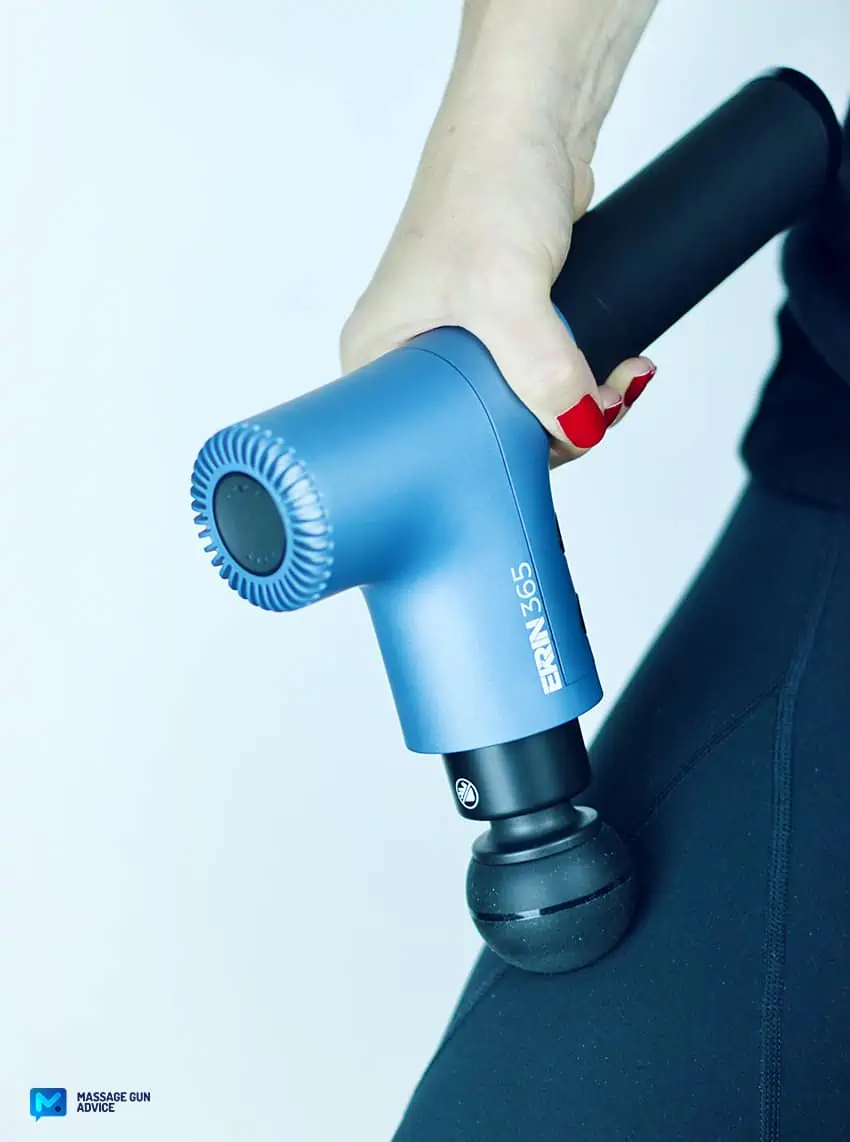
Ekrin 365
The Ekrin 365 has an amplitude of around 11 mm, placing it within the balanced range for soft-tissue work. It is lightweight, coming in under 2 lbs, and the angled handle makes it easier to reach the thighs and glutes without awkward positioning. Stall force is adequate for this type of use. It is one of the more comfortable devices to hold for extended sessions, which supports consistent use.
Bob and Brad D6 Pro
The D6 Pro has a 16 mm amplitude, which delivers a more forceful stroke than the Ekrin. This makes it better suited to larger muscle groups with more mass. For use on the thighs and glutes, it works well, though the deeper percussion may feel intense if you have not used a massage gun before. It is a strong choice if you also want to use the device for general muscle recovery from training.
Theragun Prime
The Theragun Prime is a premium option with strong build quality and reliable ergonomics. It sits at a higher price point than the other two devices here. Performance is consistent across sessions. If budget is not a constraint and you want a device from an established brand with a broad range of attachments, it is a solid choice for cellulite-focused use.
Who Should Consider Using a Massage Gun for Cellulite
A massage gun can be a useful addition if you are looking to support circulation and recovery in areas where cellulite commonly appears, such as the thighs and glutes. It is best suited to people who are already taking a broader approach that includes movement, strength training, and general lifestyle habits.
It may be worth using if you:
want a simple, at-home way to support circulation in the thighs and glutes
are already exercising and want to improve recovery between sessions
prefer a consistent, repeatable alternative to manual massage
are comfortable using light to moderate pressure on soft tissue
The key is consistency. Used regularly, it can support how the area feels and looks, even though it does not directly treat cellulite.
Who Should Be Cautious or Avoid Using One
Massage guns are generally safe when used properly, but they are not suitable for every situation. The thighs and glutes can be sensitive areas, and applying too much pressure or using the wrong technique can lead to irritation or bruising.
You should be cautious or seek advice before using one if you:
have very sensitive skin or tend to bruise easily
have varicose veins in the area you want to treat
have circulatory or clotting conditions
are dealing with swelling, inflammation, or skin irritation
feel pain when applying pressure to the area
If you are unsure, it is worth checking with a healthcare professional before using a massage gun regularly.
Bottom Line
Massage guns will not remove cellulite. That is not what they do, and no percussive device currently available can change that. What they can do is stimulate circulation, support lymphatic movement, and produce a temporary improvement in the appearance and feel of the skin in treated areas.
Used consistently alongside regular exercise and a generally healthy lifestyle, a massage gun is a reasonable addition to a cellulite management routine. The research base for percussive devices is still limited, but the mechanisms align with findings from manual massage studies.
Choosing a device that is comfortable to use matters as much as the specifications. A lighter, well-balanced massage gun you reach for every day will outperform a more powerful device that sits unused on a shelf.
References
Friedmann, D. P., Vick, G. L., & Mishra, V. (2017). Cellulite: a review with a focus on subcision.Clinical, cosmetic and investigational dermatology, 10, 17–23. https://doi.org/10.2147/CCID.S95830 Link: https://www.ncbi.nlm.nih.gov/pmc/articles/PMC5234561/
Bayrakci Tunay V, Akbayrak T, Bakar Y, Kayihan H, Ergun N. Effects of mechanical massage, manual lymphatic drainage and connective tissue manipulation techniques on fat mass in women with cellulite.J Eur Acad Dermatol Venereol. 2010;24(2):138-142. doi:10.1111/j.1468-3083.2009.03355.x Link: https://pubmed.ncbi.nlm.nih.gov/19627407/
Schaller N, et al. “Connective tissue changes in cellulite: a review.” Journal of Cosmetic Dermatology. 2021.
Hexsel D, et al. “Topical management of cellulite.” Clinics in Dermatology. 2013;31(5):627–635.
Was this article helpful?
Yes
No
Thanks for your feedback!
Post Update History
Here's a quick rundown of all the tweaks and edits we've made to this article to keep it accurate and up-to-date!
Current version.
Published on:
•
Written by:
Dr. Alex Stone, DPT, CSCS
Dr. Alex Stone, DPT, CSCS
Alex Stone is a Doctor of Physical Therapy and Certified Strength and Conditioning Specialist (NSCA). He currently practices orthopedics in Bellevue Washington and manages an online health coaching business via social media (@dr.alexstone). He is passionate about health science education and general health/wellness optimization.
The views and opinions expressed on this website are those of the authors. Any content provided by our bloggers or authors is of their opinion and is not intended to malign any religion, ethnic group, club, organization, company, individual, or anyone or anything.
All product names, logos, and brands are the property of their respective owners. All company, product, and service names used on this website are for identification purposes only. Use of these names, logos, and brands does not imply endorsement.
Our policy is to make every effort to respect the copyrights of outside parties. If you believe your copyright has been misused, please provide us with a message stating your position, and we will endeavor to correct any misuse immediately.
Some of the links in this post may be affiliate links. If you click on the link and purchase the item, we may receive an affiliate commission at no extra cost to you. Learn more here.








A great post without any doubt.