Liz lives and works in the Inland Empire of CA. She was a multi-sport athlete in her youth, competing in softball, basketball, volleyball, soccer, and swimming. Liz swam collegiately at Webster University, where she earned her B.A. degree in Communications. She is a licensed Physical Therapist Assistant with an A.A.S. degree from St. Louis Community College – Meramec. Liz has advanced training in orthopedic physical therapy through NextGen PT and movement analysis through Movement Links. She is also a certified NASM-Performance Enhancement Specialist. Liz is passionate about providing parents and coaches with the knowledge and resources necessary to create a safe and enjoyable environment for young athletes.
Massage Gun Advice team is committed to provide the highest quality articles and information which follows the highest editorial standards.
Each article and content is reviewed for medical accuracy and validated by members of our Expert Board. Their knowledge and experience guarantee quality and provide confidence in published data.
We support a zero tolerance policy with regard to any attempt of plagiarism or bad intentions of our authors or any associates.
A massage gun is a powerful tool for reducing muscle tightness, improving recovery, and maintaining healthy soft tissue. When used correctly, it can accelerate recovery and enhance performance. Used incorrectly, it can cause irritation, bruising, or discomfort.
This guide explains how massage guns work, how to use them safely, what attachments do, and common mistakes to avoid. For an overview of benefits before getting into technique, see our article on Massage Gun Benefits.
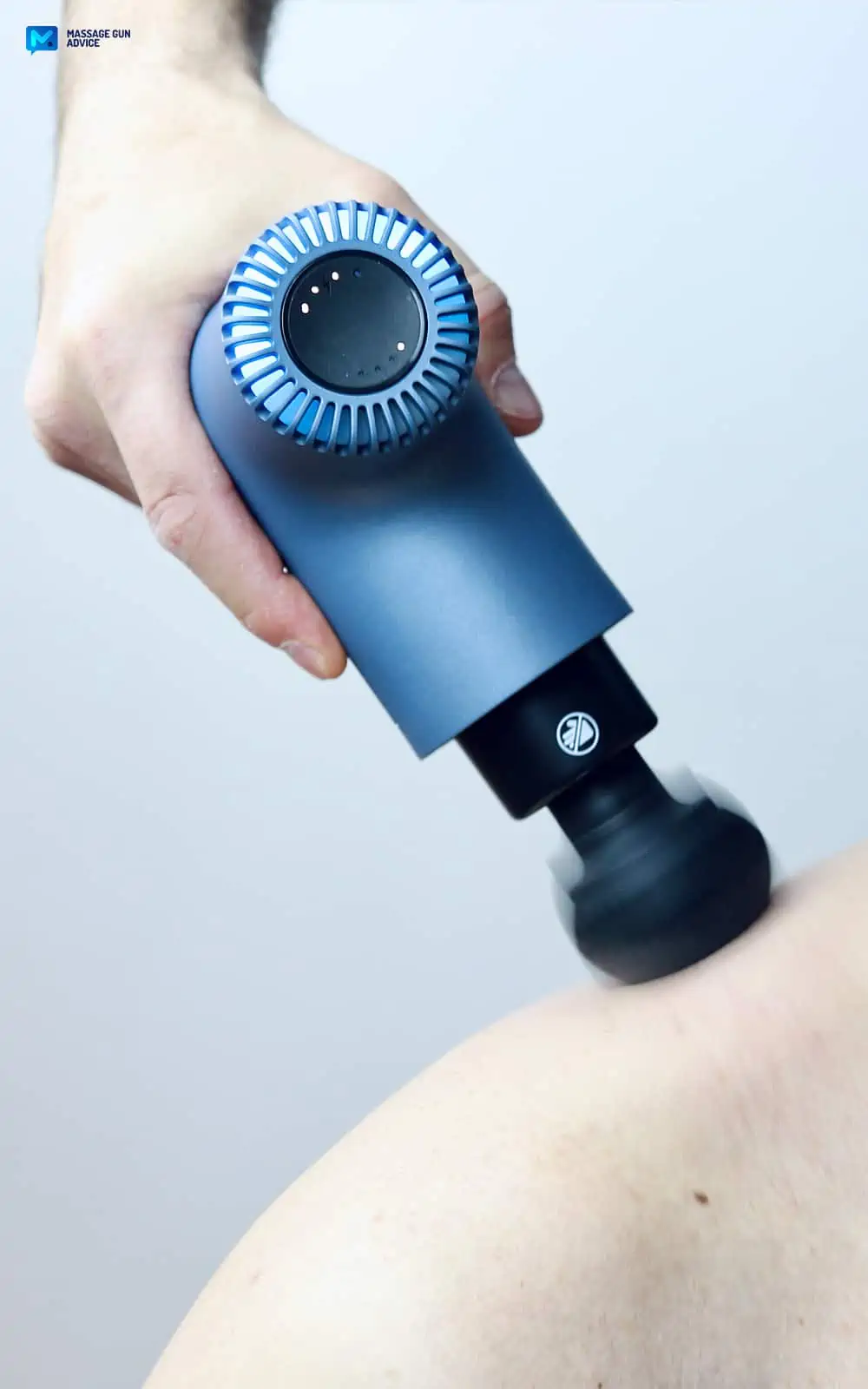
Massage guns deliver rapid percussive strokes to soft tissue via a motorized head. Most devices operate between 1,200 and 3,200 percussions per minute, with adjustable speed settings.
Two key specifications determine how a massage gun feels:
Amplitude
The distance the head travels with each stroke. Lower amplitude (around 10 mm) delivers a shallower, gentler sensation, while higher amplitude (16 mm or more) reaches deeper into muscle tissue. Moderate amplitude is often sufficient for smaller or softer muscles, whereas larger, denser muscles can tolerate more.
Stall Force
How much pressure the motor can sustain before slowing down. Low stall force can limit effectiveness on dense muscles, as the device may slow when pressed firmly.
Deep tissue therapy.
The combination of amplitude and stall force affects real-world performance. Speed alone doesn’t indicate effectiveness, it’s how the device interacts with the muscle that matters.
The type of device you use also affects how comfortable and effective these techniques feel in practice.
Basic Massage Gun Technique
Proper technique is more important than speed or power. Follow these guidelines for safe and effective use:
Start on a low speed: Begin at the lowest or second-lowest setting. Increase only if the tissue tolerates it.
Hold perpendicular to the skin: Keep the head flat against the muscle surface. Angling the device reduces contact and distributes pressure unevenly.
Move slowly: Glide at roughly one inch per second to allow tissue to respond.
Use light to moderate pressure: Let the percussion do the work. Pressing too hard can cause bruising, especially on softer areas.
Spend 1 to 2 minutes per muscle group: Longer isn’t always better. For full-body sessions, move systematically through muscles.
Work along the muscle fiber: Follow the length of the muscle rather than moving across it for comfort and consistent stimulation.
If you’re comparing different devices, it helps to look at how they perform in real use rather than just relying on specifications.
When to Use a Massage Gun
Before Exercise
short sessions (30–60 sec)
increase tissue readiness
not a substitute for warm-up
After Exercise
reduce soreness
improve range of motion
focus on worked muscles
Between Training Days
manage tightness
maintain tissue quality
It’s important to use a massage gun properly.
How Often Should You Use a Massage Gun?
1–2 times per day is sufficient for most people
30–90 seconds per muscle group
more frequent use does not equal better results
Massage Gun Attachments and How to Use Them
Most massage guns include multiple attachment heads that distribute percussive force differently. Choosing the right head improves comfort and effectiveness.
Each attachment changes how the force is applied to the muscle, which affects both comfort and depth of treatment.
Image
Attachment
Best For
Recommended Speed
Technique / Notes
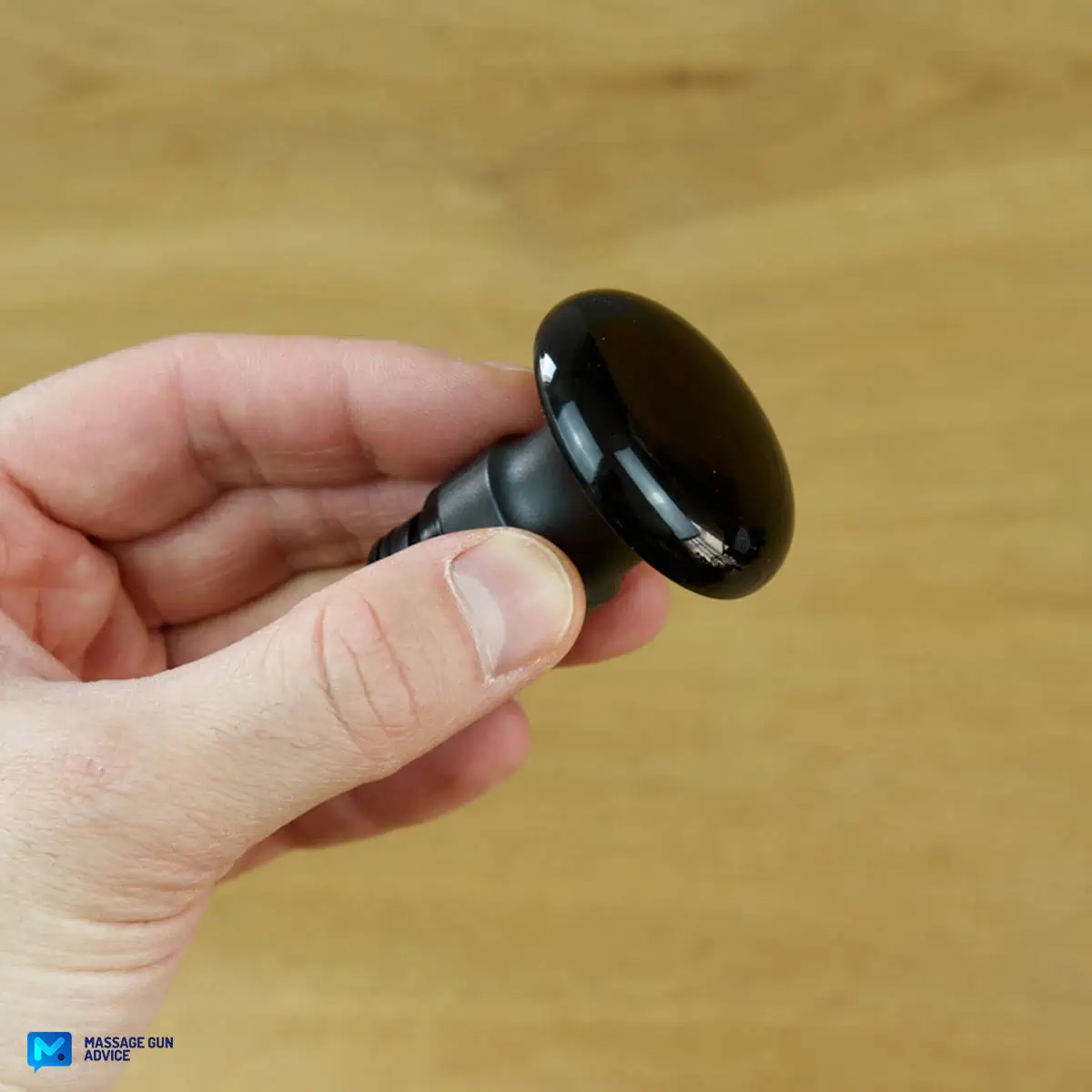
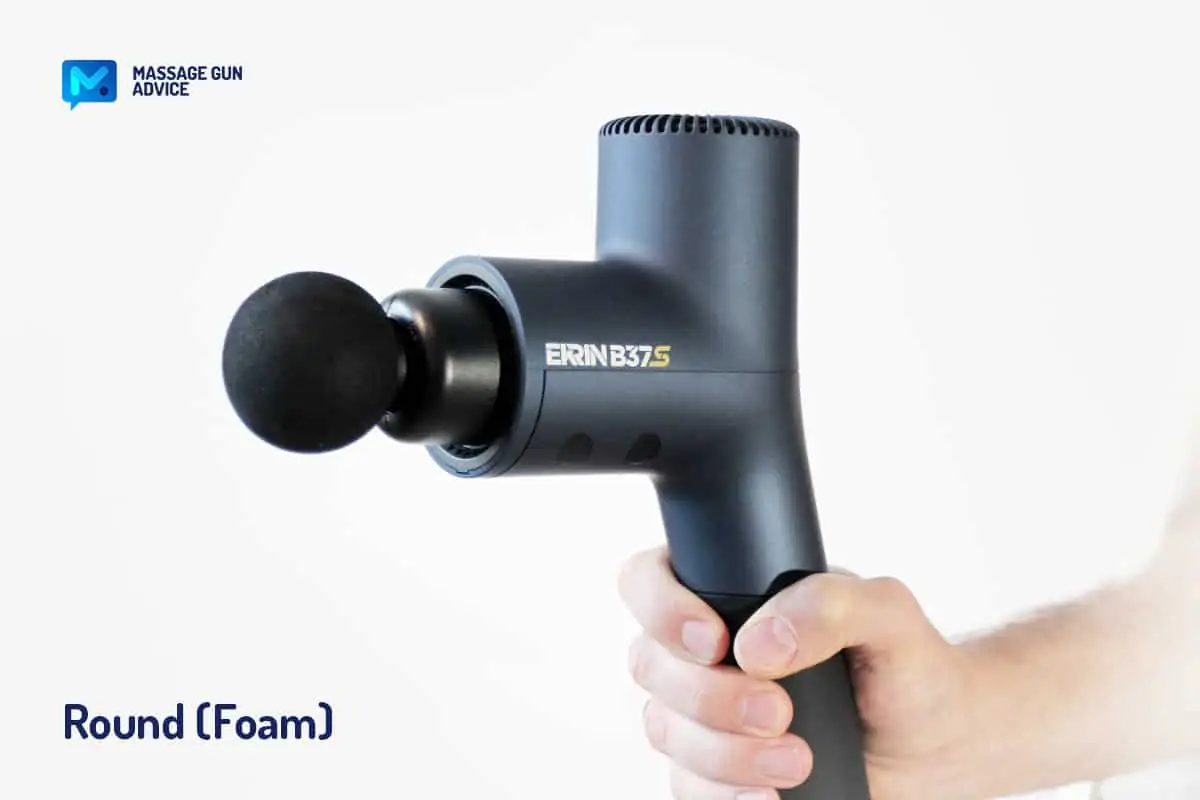
Ball
General muscle recovery
Moderate
Glide along full muscle length, 60-90 sec per area. Works well on quads, hamstrings, glutes, back.
Flat
Large, flat muscles
Moderate
Covers broad areas efficiently. Less intense than ball for prolonged sessions. Good for thoracic back, quads, hamstrings.
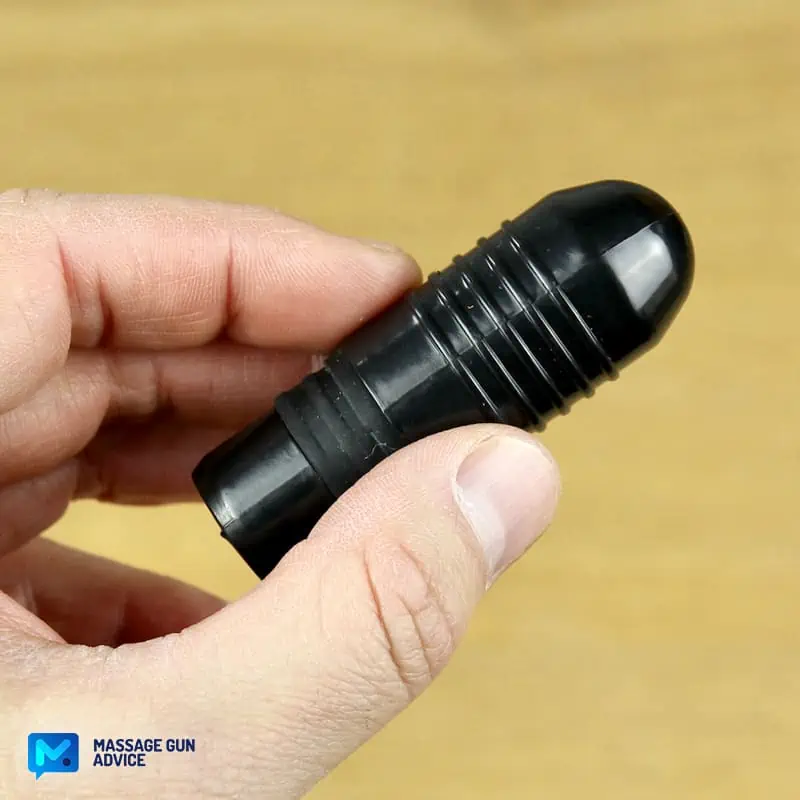
Bullet
Trigger points, tight knots
Low
Apply lightly to specific spots, 20-30 sec per point. Do not press hard. Not for general coverage.
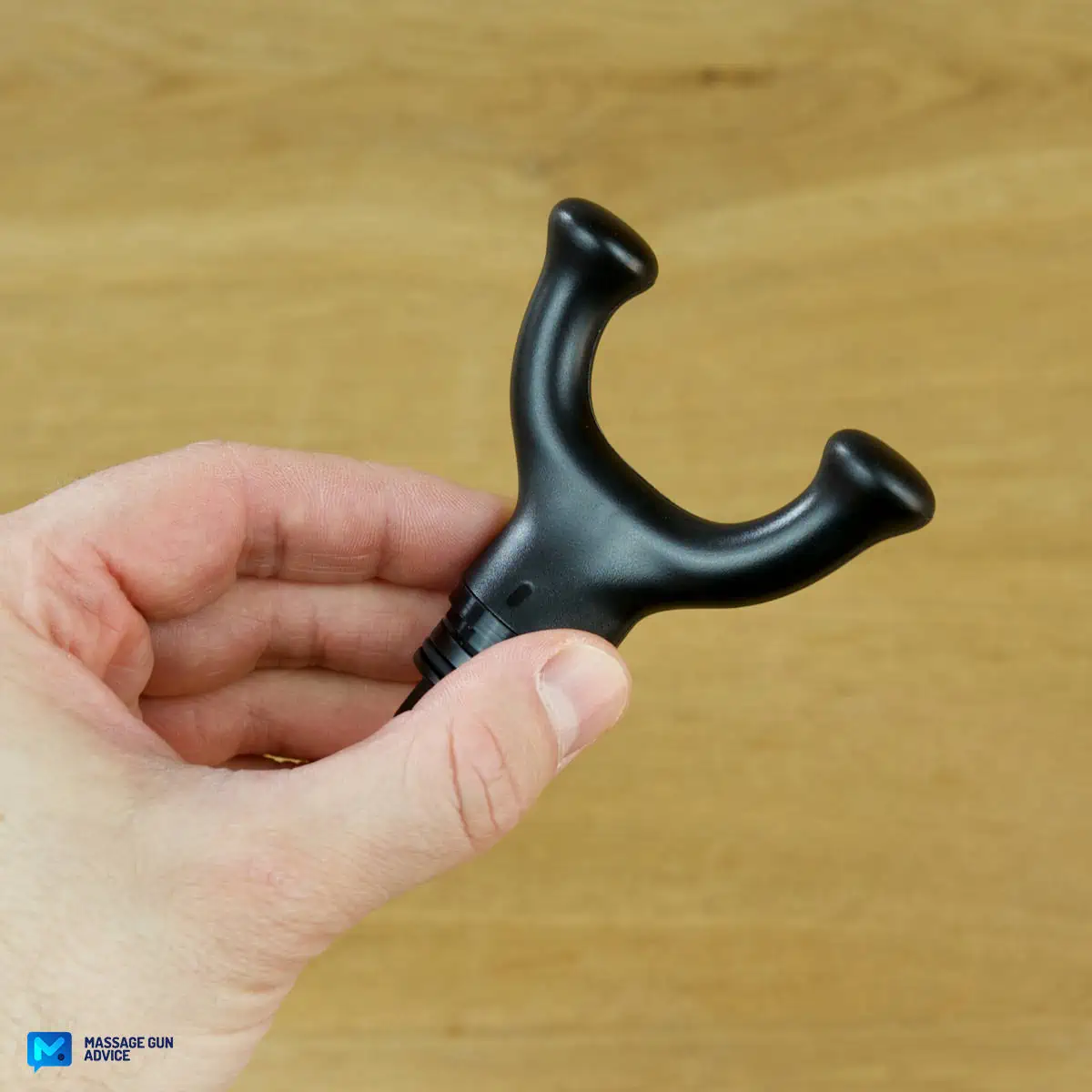
Fork
Spine, Achilles, neck sides
Low
Position prongs on either side of bony structures. Glide along paraspinal muscles. Never directly on bones.
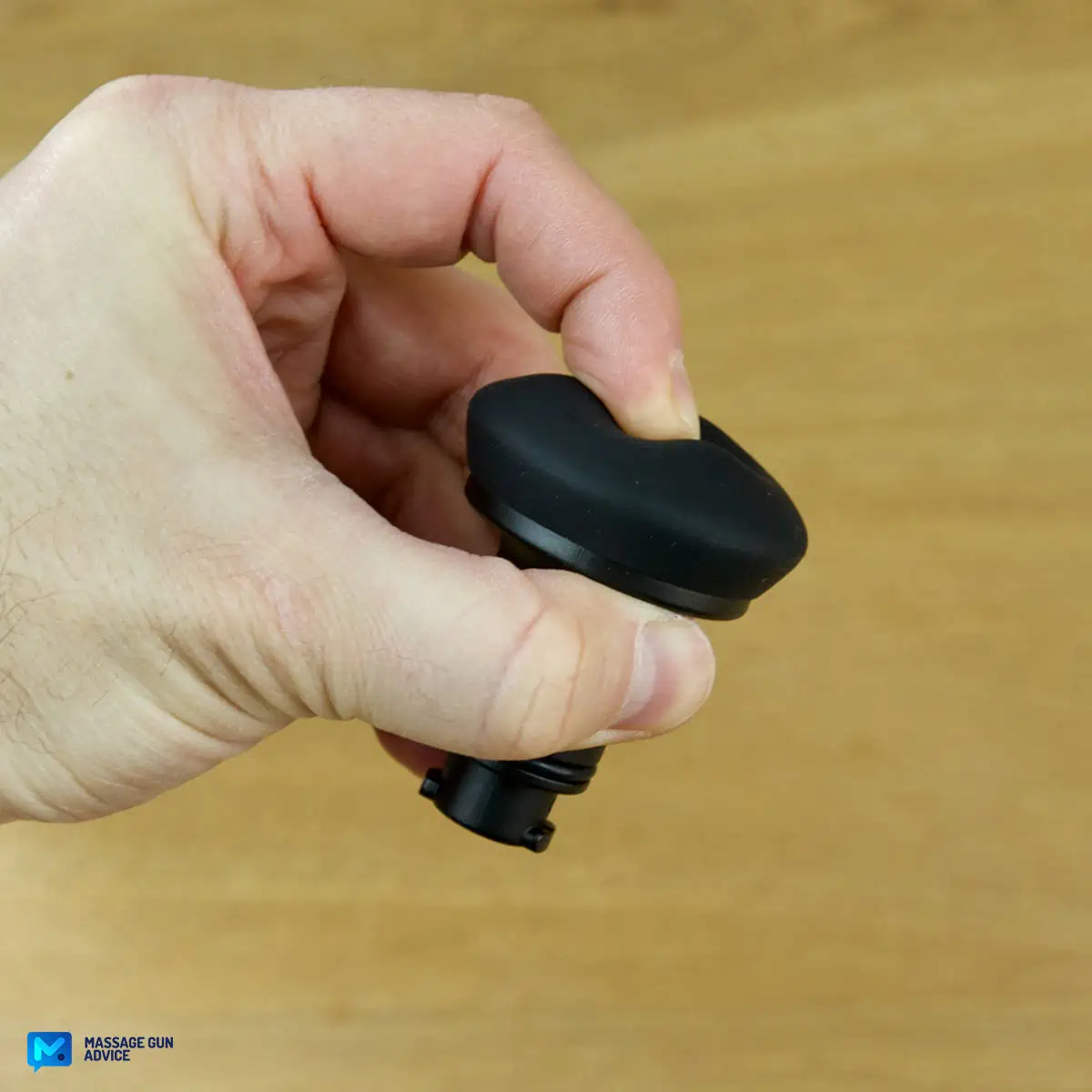
Cushioned / Pneumatic
Sensitive or thin tissue
Low
Softens impact, reduces intensity. Ideal for IT band, shins, forearms. Use light contact.
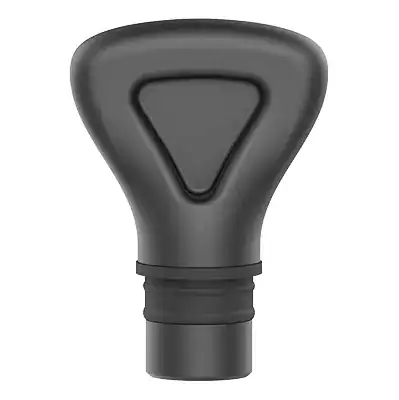
Wedge / Thumb
Contoured areas (neck base, shoulder blades)
Moderate
Angled pressure fits body curves. Glide slowly for comfort and coverage.
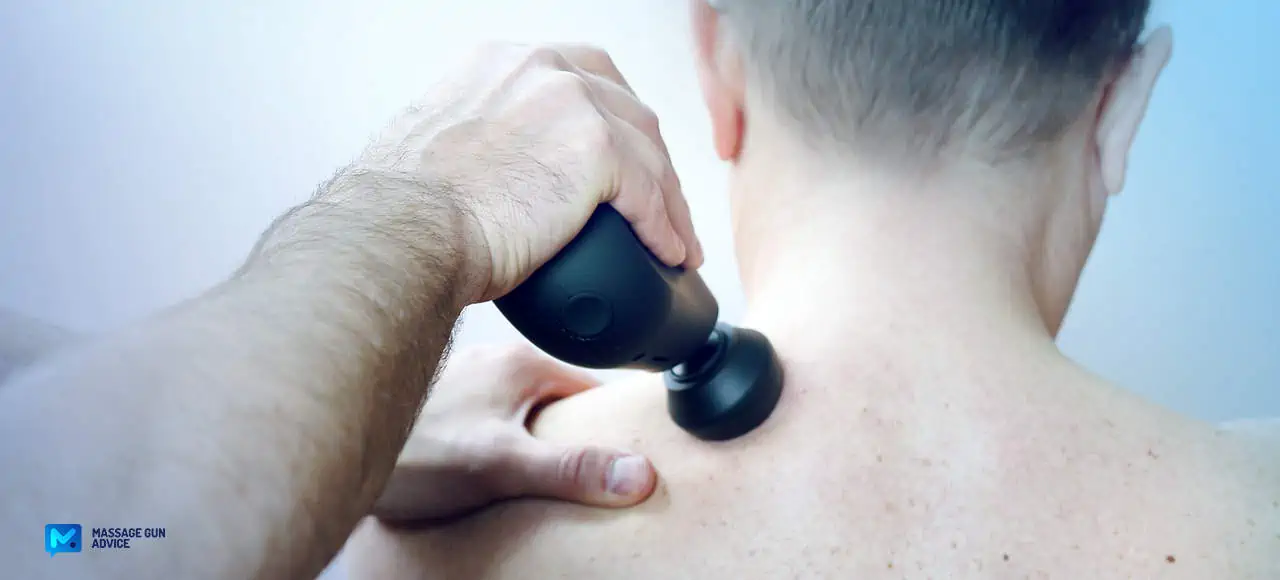
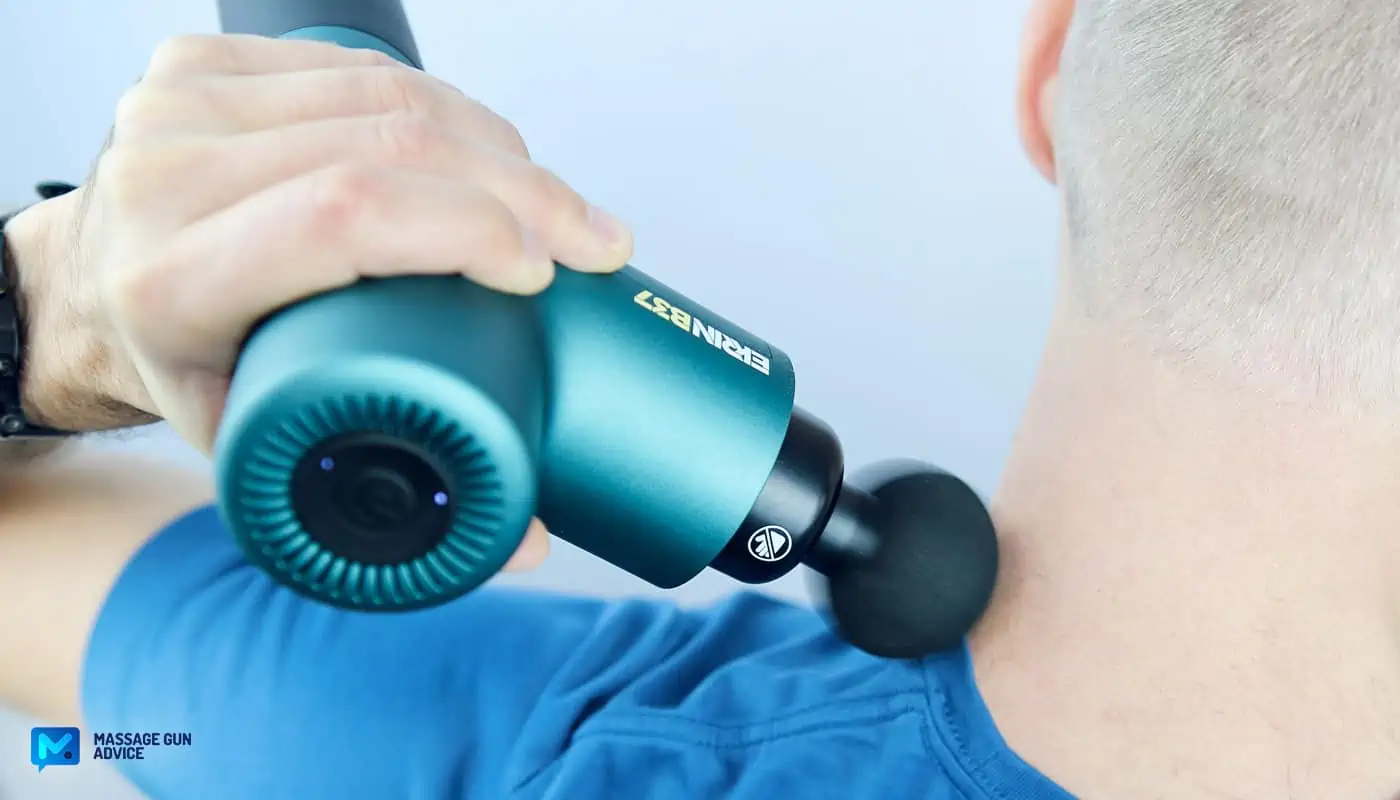
Neck and throat: Avoid the sides of the neck. Fork attachment may be used carefully along paraspinal muscles.
Inflamed, bruised, or broken skin: Cuts, rashes, sunburn, active inflammation.
Varicose veins: Pressure may cause damage.
Acute injuries: Recent strains, sprains, or swelling. Use rest and ice in the acute phase.
Pregnancy (abdomen): Avoid abdominal use; consult a healthcare provider.
Implants or medical devices: Seek medical advice before use.
Final Thoughts
A massage gun is a practical recovery tool when used correctly. Focus on proper technique, matching attachments to the target area, and moving at the right speed. Even small adjustments like using a cushioned head on sensitive tissue or following muscle fibers can make sessions safer and more effective.
If you’re still deciding which device to buy, check our guide to the Best Massage Gun for tested options and practical advice.
FAQs
Here are some questions answered for you. We have addressed massage gun attachments in this section.
How to use a massage gun on yourself?
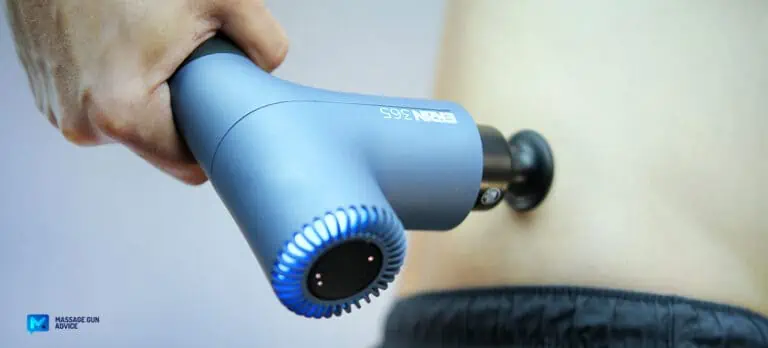
Most percussion massagers are T-shaped. This means that the handle is straight. Massaging yourself may not be as smooth as it would be with a more ergonomic handle. However, some devices have this feature, which means you can reach the difficult body spots. However, you may need someone to help you massage your back and traps.
How to use a percussion massager on the neck?
Never massage the front part of your neck. Focus only on the back part. Depending on the area around the neck you are trying to massage, use an appropriate massage gun attachment.
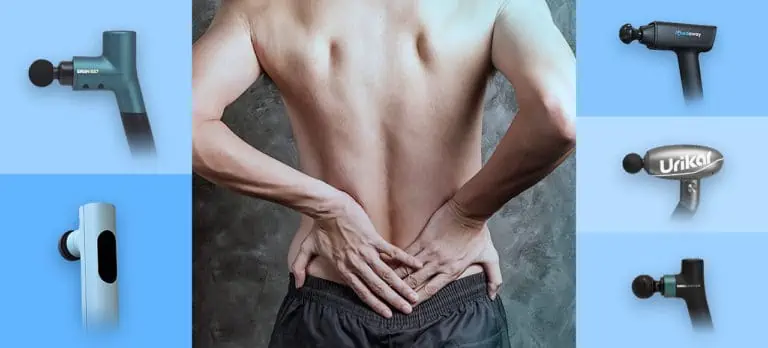
How to Use a Massage Gun for Lower Back Pain Relief?
If you’re using a massage gun to relieve lower back pain, we suggest you tread carefully.
Use a lower setting and slowly massage away. We recommend the ball head here as well.
Can I use a massage gun on my upper back?
Run the massage gun back and forth along the muscle fibers in your upper back. Do it for 10 seconds per section of your back. Again, we’ll note here that a device with better ergonomics will do a better job. If you have a buddy helping you, they can use the flat head for maximum results.
How to use a massage gun on your legs?
With legs, you want to target the quads and the calves. We recommend the flat head here because with legs, you may need something a little more intense – especially the quads. Stay in an area for about 30 seconds before moving along. If your concern is cellulite on your legs, make sure you read this post: Can a massage gun help with cellulite?
How to use a massage gun on your feet?
You can massage the soles of your feet, especially if you’ve been running and need a bit of relief in your soles. You can cross one foot over the opposite knee for a good position. Start at low intensity. If you want to focus on particular spots, use the bullet head here. For a more generalized massage, you can use the ball head. In our post, we write more about the topic of foot pain.
How to use a massage gun for calf muscle pain relief?
You can massage your calves after a leg workout session or after running. Move the massage gun along the calves, feeling each time for sensitive spots. Stay on the spot for 10 seconds before moving along. Massage one leg for 1-2 minutes, then move on to the other. You can use the flat head for better results. Some devices come with a specific massage head for calves.
How to use a massage gun for knots?
Muscle knots can be painful and can last longer if not taken care of soon enough. A massage gun can help ease them away.
Massage the knotty area carefully and slowly as you feel it. Start at a lower intensity and focus on the knotty area with the bullet head. Hover the gun over the knot for a minute or two.
Article Sources
Barbara Alcaraz, M.A., B.A., L.M.T. Massage Therapy Program Chair M. A. Organizational Management, University of Phoenix B.A. University of Minnesota, American Studies L.M.T. Northwest Health Careers. Do Massage Guns Really Work?. Northwest Career College, August 6, 2020.
Hi! I'm Luke, a Biomedical Engineer with a passion for sports. I'm a lead reviewer for massage guns and wellness tech products at Massage Gun Advice. Alongside a dedicated Experts Board, I ensures each review is the result of thorough testing, in-depth research, and rigorous fact-checking, providing our readers with reliable and comprehensive insights.
Use recommended by my chiropractor, but instruction booklet with the gun was only about the buttons and heads, nothing about how to use, or how long for, or how often, so your article has been very helpful. Thank you.
The views and opinions expressed on this website are those of the authors. Any content provided by our bloggers or authors is of their opinion and is not intended to malign any religion, ethnic group, club, organization, company, individual, or anyone or anything.
All product names, logos, and brands are the property of their respective owners. All company, product, and service names used on this website are for identification purposes only. Use of these names, logos, and brands does not imply endorsement.
Our policy is to make every effort to respect the copyrights of outside parties. If you believe your copyright has been misused, please provide us with a message stating your position, and we will endeavor to correct any misuse immediately.
Some of the links in this post may be affiliate links. If you click on the link and purchase the item, we may receive an affiliate commission at no extra cost to you. Learn more here.






Use recommended by my chiropractor, but instruction booklet with the gun was only about the buttons and heads, nothing about how to use, or how long for, or how often, so your article has been very helpful. Thank you.